How IBON Successfully Entered the Wenzhou Footwear Market with AI Shoe Upper Marking Machines
How IBON Opened the Wenzhou Footwear Market
Wenzhou is one of the largest footwear manufacturing centers in China.
With nearly 500 shoe factories producing around 1.8 billion pairs of shoes every year, competition is intense and factories are constantly looking for ways to improve efficiency, reduce labor costs, and stabilize production quality.
For any equipment supplier, entering the Wenzhou footwear market is not easy.
But in recent years, IBON gradually built a strong presence in Wenzhou, especially through its shoe upper marking machines.
So how did IBON succeed in such a competitive market?
The answer is simple:
The right product, practical value, local support, and real factory results.
There are industry reports and local discussions suggesting that a footwear factory in Wenzhou once placed a bulk order of 10 IBON shoe upper marking machines.
Yes, this story has been widely discussed in the footwear industry around the Lucheng Shoe Capital area in Wenzhou. In the second half of 2024, a medium-sized leather shoe factory in Wenzhou placed a one-time order for 10 sets of IBON IBON-1290 shoe upper marking machines, becoming one of the largest single orders since IBON entered the Wenzhou market.
1. Which factory was it?
According to industry discussions, it was a factory located in the Lucheng/Ouhai area, mainly producing business casual leather shoes for domestic second-tier brands while also operating its own brand. The factory name was never officially disclosed, but the case is well known within the local footwear machinery industry and IBON’s Wenzhou office.
Factory scale:
300–500 workers
Two shoe production lines
Previously relied completely on manual upper marking
During peak seasons, the factory needed around 40–50 marking workers.
See How IBON Shoe Upper Marking Machine Works in Real Factory Production
2. Why did they purchase 10 machines at once?
1) Labor pressure became a serious problem
Recruiting workers in Wenzhou has become increasingly difficult, especially experienced marking workers.
Skilled marking workers typically earn RMB 6,000–8,000 per month
Even at those salaries, factories still struggle to hire enough workers
One IBON machine can replace approximately 5–8 experienced workers.
With 10 machines, the factory was able to replace around 40–80 workers, saving an estimated RMB 2–3 million in labor costs annually.
2) Precision and quality requirements
Manual marking often creates large deviations, especially on genuine leather uppers.
Traditional manual marking accuracy: around ±1–2 mm
Higher material waste and rejection rates
IBON’s AI vision system achieved:
Accuracy up to ±0.02 mm
Qualification rate above 99%
Genuine leather utilization improved by 3%–5%
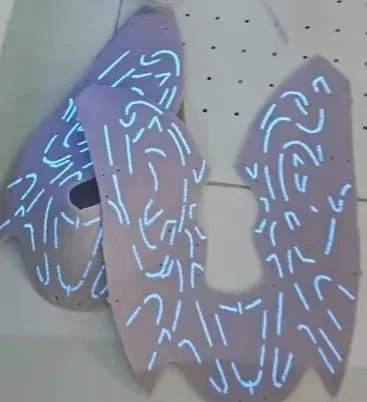
High Precision Shoe Upper Marking Results in Factory
Precision and consistency were another key reason. Compared with manual marking, which typically has an error range of ±1–2 mm, IBON’s AI vision marking system greatly improves accuracy and reduces material waste, especially for genuine leather uppers where material cost is high.
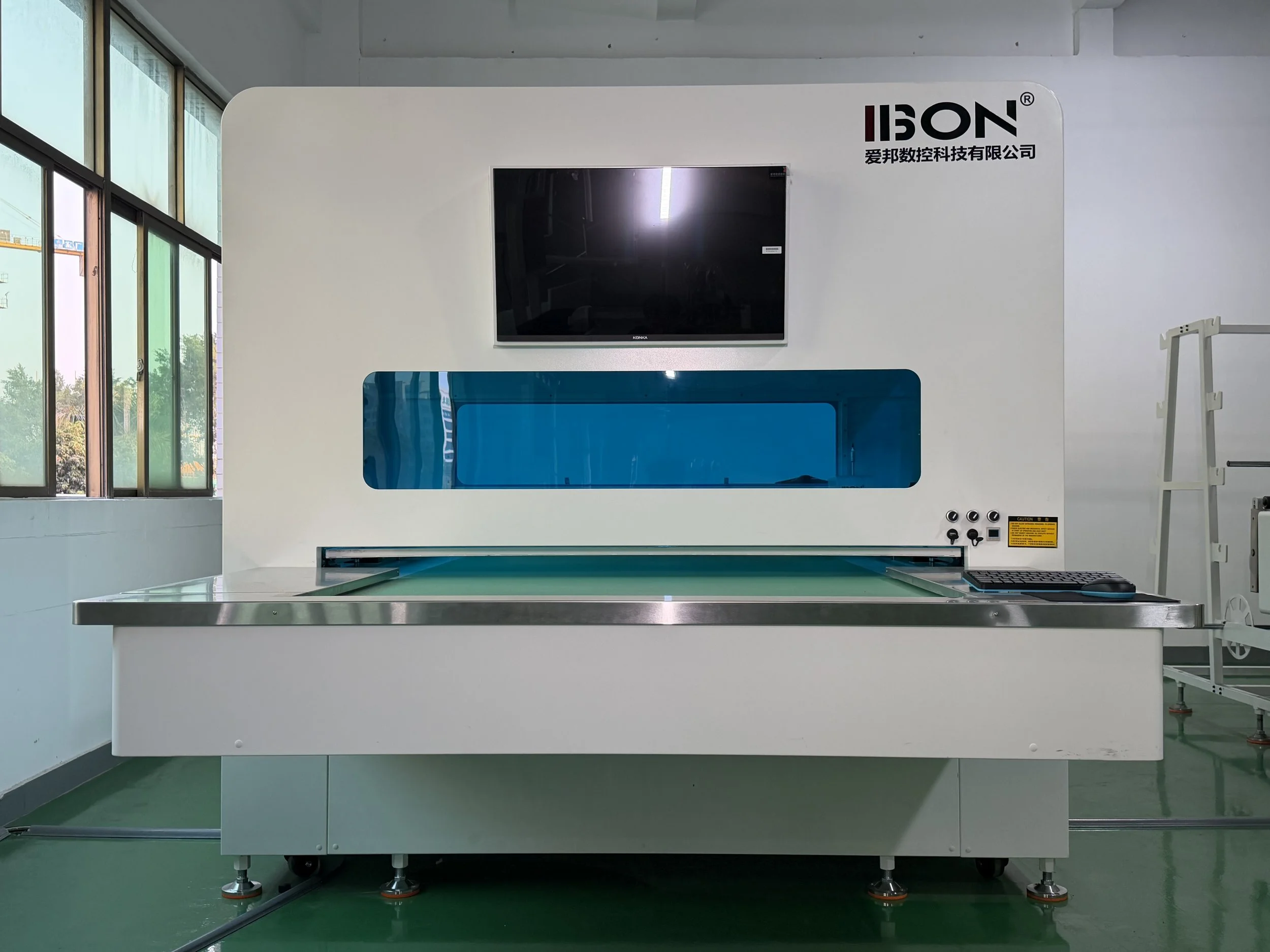
intelligent footwear machinery
For high-accuracy marking on shoe uppers with automatic positioning, reducing labor by up to 6 workers and reaching a daily output of up to 50,000 pieces.
3) Large style variety and frequent production changes
The factory produces more than 200 shoe styles, with frequent repeat orders and medium-to-small production batches.
With traditional screen printing or laser marking methods, changing styles was slow and inefficient.
IBON helped solve this problem because:
No physical molds are required
Digital layout switching is fast
Style changes can be completed in around 10 minutes
This was much faster and more flexible than traditional processes.
4) Influenced by nearby factory cases
Between 2023 and 2024, more than 10 nearby factories had already purchased 1–2 IBON machines for testing.
Most feedback from those factories was:
Labor-saving
Stable
Easy to operate
The factory owner personally visited several factories to watch the machines running in real production before deciding to purchase 10 machines and fully replace manual marking processes.
3. Order details (according to industry sources)
Machine model
IBON-1290 Dual-Head Inkjet Shoe Upper Marking Machine
Order value
Total value estimated around RMB 900,000–1,000,000
IBON’s Wenzhou office provided bulk pricing and installment payment support
30% deposit with remaining payment completed within 6 months
Delivery
Delivered in three batches between October and December 2024
Service support
IBON engineers stayed at the factory for one month to provide:
Installation
Training
Machine adjustment
Template setup
Production results
After all 10 machines entered production:
Marking workers reduced from 45 to only 8 operators
Production efficiency increased by 40%
Defect rate reduced by 60%
4. Impact on IBON in the Wenzhou market
Benchmark case in the local footwear industry
The 10-machine order quickly attracted attention throughout the Wenzhou footwear industry.
Soon after:
Factories connected to brands such as Yearcon and Red Dragonfly began testing and purchasing IBON machines
More local factories started considering intelligent marking automation
Word-of-mouth growth
Many factory owners believed:
“If one factory is confident enough to buy 10 machines at once, the machines must really work.”
From late 2024 to 2025, IBON’s marking machine sales in the Wenzhou area reportedly tripled.
Stronger market position
IBON gradually transformed from an “outside brand” into one of the leading intelligent shoe upper marking machine suppliers in Wenzhou, directly competing with established local brands.
5. In summary
The success of the 10-machine order came from several factors working together:
Rising labor costs
Strong customer case validation
IBON products matching real factory needs
Reliable local service support
This order helped IBON quickly establish itself in the Wenzhou footwear market and gain strong recognition within the local shoe manufacturing industry.
